
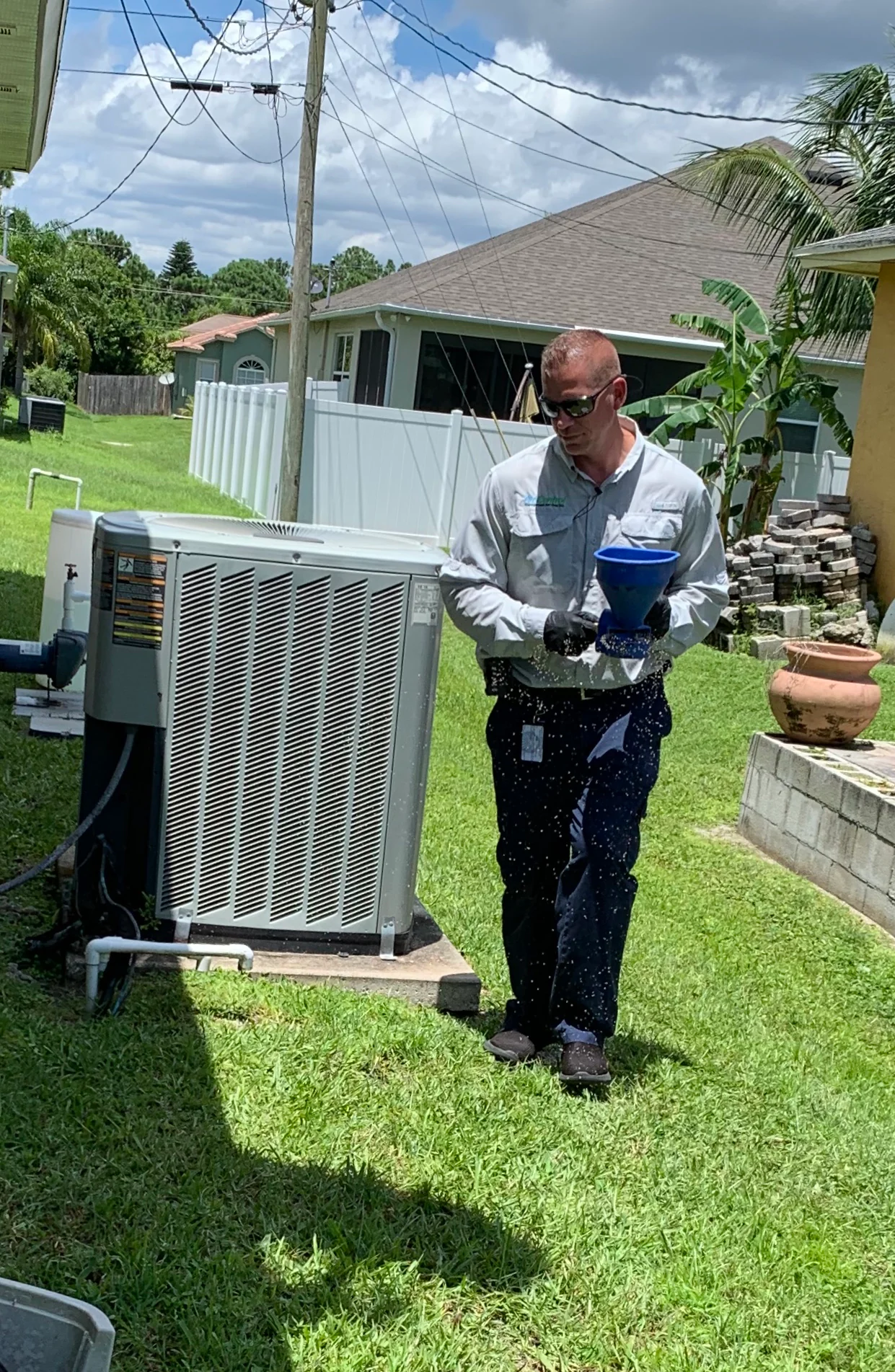
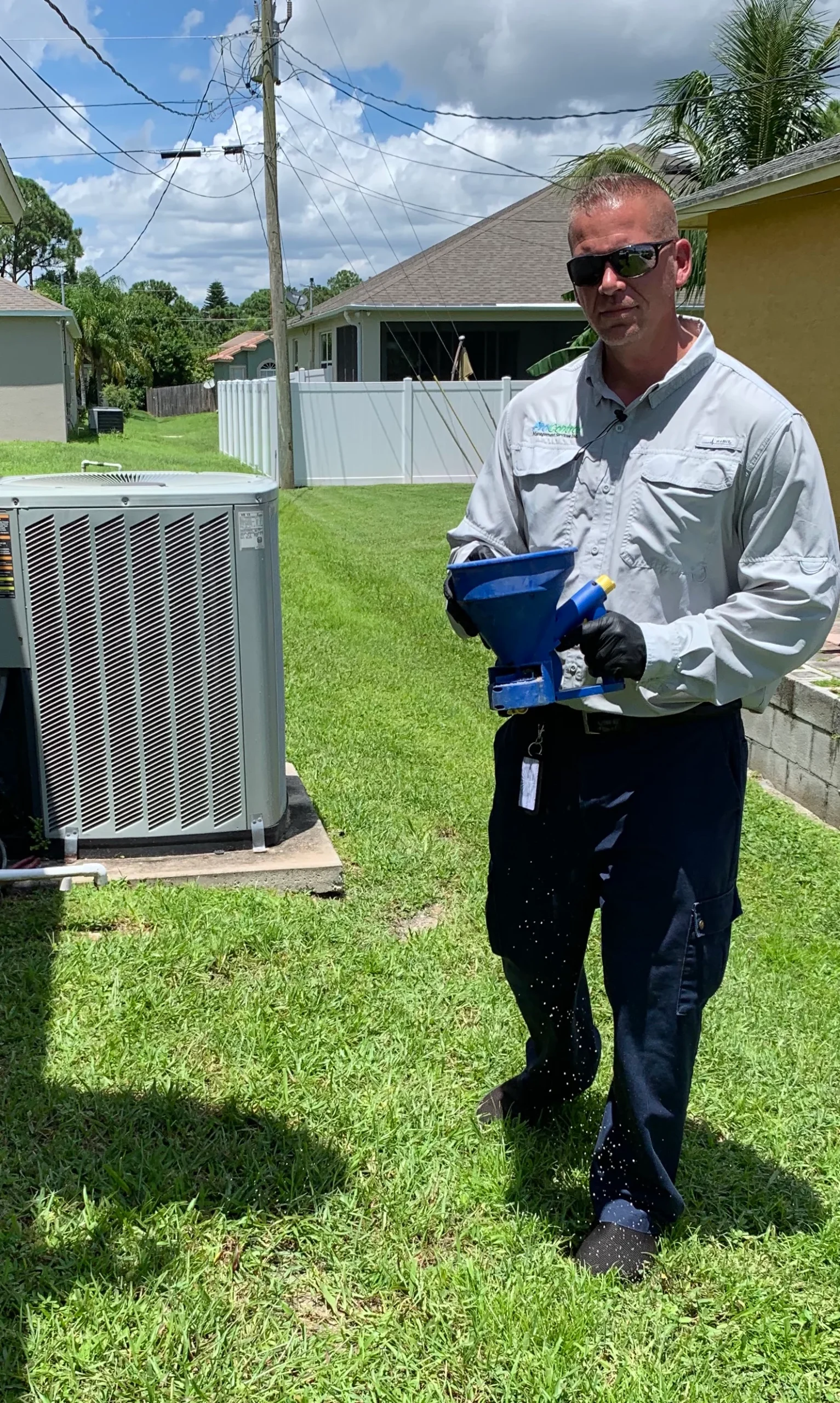
Most people call a pest control company when something has already gone wrong — ants in the kitchen, something scratching in the attic, or a termite swarm that shows up out of nowhere. The fix they get is temporary. A spray, a visit, a bill, and then the same problem six weeks later. That’s not treatment. That’s a subscription to a problem.
Fort Pierce’s climate doesn’t give pests a slow season. The heat and humidity that make the Treasure Coast worth living on are the same conditions that keep termite colonies active, mosquito populations breeding, and rodents looking for a way inside — every single month of the year. If you’re in Indian River Estates or near the Savannas, you already know that wildlife and insects don’t stop at your property line just because you’d like them to.
What actually changes after a real treatment is that you stop thinking about it. You use your backyard again. You stop finding droppings. You stop wondering what that sound in the wall is. That’s the outcome worth paying for — not just a temporary knockdown, but a home that stays protected between visits.
We’ve been operating out of Port St. Lucie since 2006 — about 15 miles from Fort Pierce. That proximity matters more than it might sound. Our technicians know the difference between a home near the Fort Pierce Inlet and one backing up to the Savannas Preserve. They know what the Indian River Lagoon corridor does to moisture levels, and what that means for your crawl space or your attic.
This isn’t a national chain routing your call through a 1-800 number. We’re a locally owned company that built our reputation in St. Lucie County and has stayed here. Fully licensed under Florida FDACS standards, fully insured, and backed by a satisfaction guarantee — so if the job isn’t done right, we make it right.
Fort Pierce has enough fly-by-night contractors. We’re not one of them.
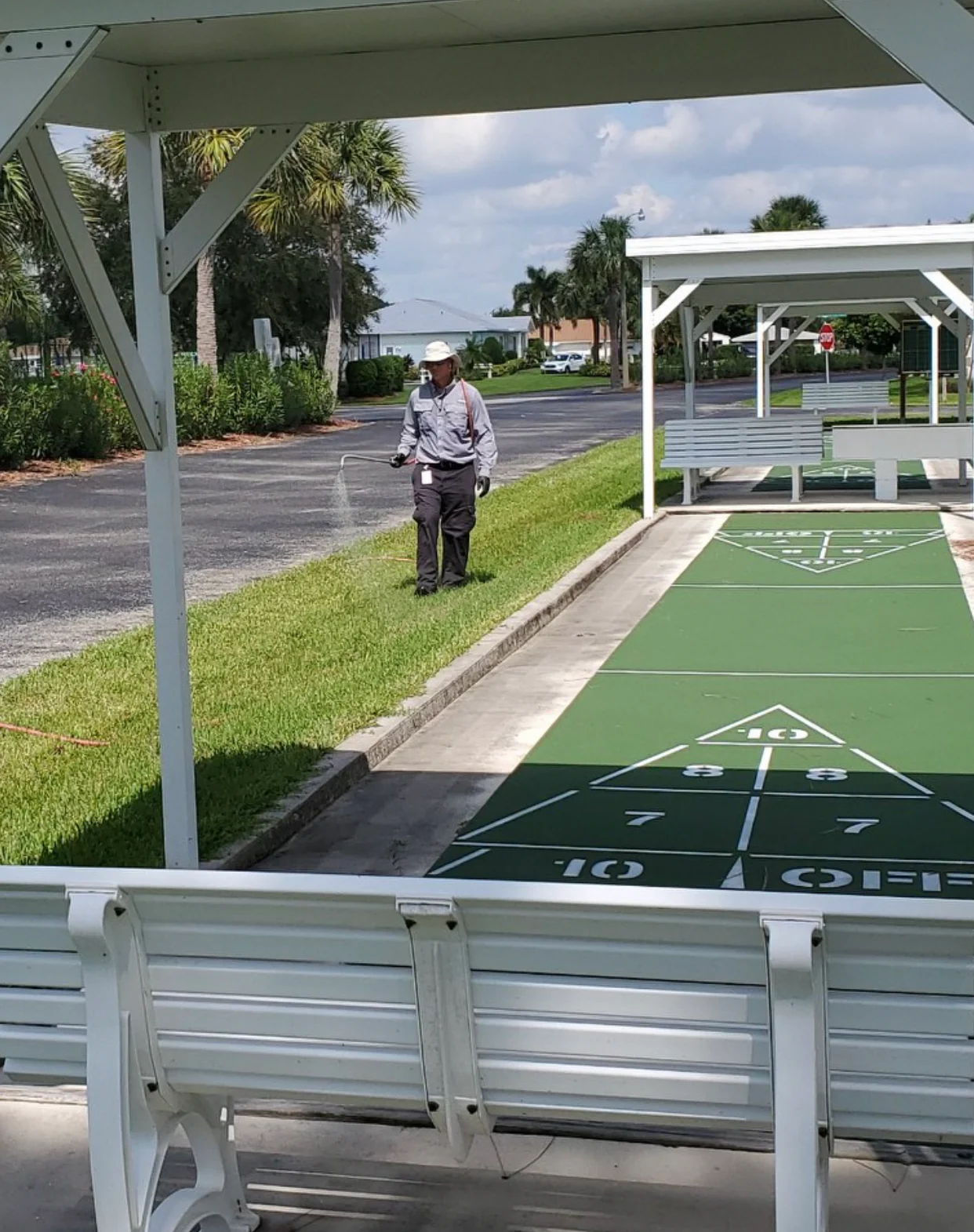
It starts with a free estimate. One of our technicians comes out, walks your property, and actually looks at what’s going on — not just the symptom you called about, but the full picture. In Fort Pierce, that means checking entry points that older homes tend to have, looking at moisture-prone areas that the local humidity accelerates, and identifying conditions near your yard or structure that are attracting pests in the first place.
From there, you get a clear explanation of what was found and what treatment makes sense. No upselling, no pressure. If it’s a termite issue, that process follows Florida’s permitting and inspection requirements — we handle that side of it so you don’t have to navigate the paperwork. If it’s rodents, mosquitoes, wildlife, or a general pest problem, the treatment plan is matched to what your property actually needs.
After the initial treatment, the follow-up schedule is built around Fort Pierce’s year-round pest activity — not a generic quarterly plan designed for a drier climate somewhere else. The goal is to stay ahead of the problem, not just respond to it after it’s back.
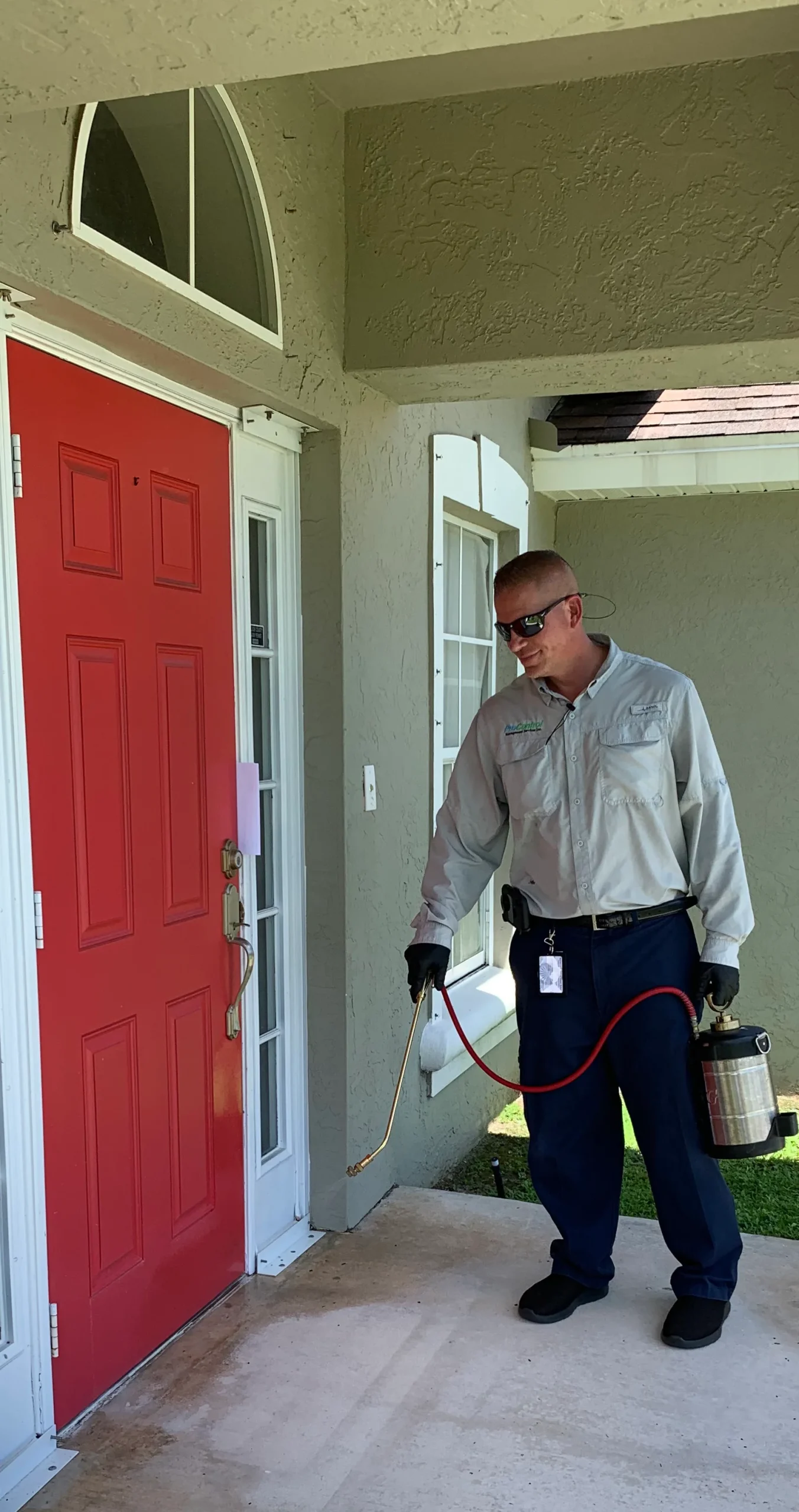
Fort Pierce homeowners deal with a specific combination of pest pressures that most generic treatment plans aren’t built for. Subterranean and drywood termites are both active here, and the older housing stock in neighborhoods like downtown Fort Pierce and Indian River Estates gives them plenty of structural wood to work with. Mosquitoes breed in the slow-moving water along the Indian River and the wetlands near the Savannas system. Fire ants colonize yards fast in the warm, moist soil throughout St. Lucie County. And once the rainy season hits, rodents and cockroaches start looking for higher ground — which usually means your home.
We cover all of it: termite control, rodent control, mosquito control, wildlife removal, lawn and shrub treatment, and gutter guard installation. The eco-friendly approach matters here specifically because of the Indian River Lagoon. It’s one of the most biodiverse estuaries in North America, and residents who live near it don’t want harsh chemical runoff anywhere near that watershed. The treatments we use are effective without being reckless about what ends up in the surrounding environment.
If you’re on South Hutchinson Island, the salt air and persistent moisture create a different set of structural vulnerabilities than you’d find inland. If you’re near the Savannas, wildlife intrusion is a more consistent concern. We adjust the service to fit your actual situation — not a one-size plan that ignores where you live.
Termites in Fort Pierce are tricky because they do most of their damage before you see any obvious signs. The two most common species here — subterranean termites and drywood termites — behave differently, but both tend to stay hidden until the damage is already significant. Subterranean termites travel through soil and build mud tubes along your foundation or walls. Drywood termites nest directly inside the wood and leave behind small piles of frass, which looks like fine sawdust or sand near baseboards, windowsills, or door frames.
If you’re in an older home — especially anything built before the 1990s in neighborhoods like downtown Fort Pierce or Indian River Estates — the risk is higher simply because of the age and type of wood construction involved. Fort Pierce’s heat and humidity accelerate the conditions termites need to thrive, and there’s no winter cold snap to slow colony growth. A professional inspection is the only way to know for sure what you’re dealing with. We offer free estimates, so there’s no cost to having someone actually look.
The honest answer depends on where you live and what you’re dealing with, but for most Fort Pierce homeowners, quarterly service is the minimum that makes sense. The subtropical climate here means pest populations don’t go dormant — termites, ants, cockroaches, and mosquitoes are active every month of the year. A single annual treatment might knock back a population temporarily, but it won’t hold through the summer rainy season when moisture drives insects and rodents to look for shelter inside.
If your property backs up to a natural area — the Savannas Preserve, the Indian River shoreline, or any of the wetland corridors around St. Lucie County — you’re dealing with constant pressure from the outside in. In those situations, more frequent service visits or targeted add-ons like mosquito control or wildlife exclusion make a real difference. We set the right schedule during the initial inspection based on your specific property, not a generic recommendation.
This is a fair question, and the short answer is yes — when applied correctly by a licensed professional, eco-friendly treatments are genuinely effective. The distinction isn’t between “chemical” and “no chemical.” It’s about using targeted, lower-toxicity products in a way that eliminates the pest problem without unnecessary environmental exposure. In Fort Pierce, that matters beyond just personal preference. The Indian River Lagoon runs along the city’s western edge, and the Savannas wetlands border residential neighborhoods throughout the area. What gets applied around your home doesn’t stay contained to your property.
Our eco-friendly approach is built around using the right product for the right pest at the right concentration — not blanket-spraying everything and hoping for the best. That kind of precision is actually more effective long-term because it targets the pest without disrupting the surrounding environment in ways that can create secondary problems. If you’ve had treatments before that didn’t hold, the issue usually isn’t that the products were too mild — it’s that the source of the problem wasn’t properly identified and addressed.
A one-time treatment handles whatever is present at the time of service. It can be the right call for an isolated situation — a specific nest, a single infestation, or a problem that’s clearly contained. But in most Fort Pierce homes, a one-time treatment is a short-term fix. The conditions that created the problem in the first place — moisture, entry points, proximity to natural areas, the climate itself — don’t go away after one visit. Within weeks or months, populations rebuild and you’re back where you started.
A recurring plan keeps a treated barrier in place between visits and catches new activity before it becomes a full infestation. It’s also more cost-effective over time than calling for emergency service after a problem has gotten out of hand. For homes near the Savannas or along the Indian River corridor, where environmental pest pressure is essentially constant, recurring service isn’t an upsell — it’s just the practical choice. We build the schedule around your property’s actual needs after the initial inspection.
Yes, and it makes a significant difference for waterfront and near-water properties. Mosquitoes need standing or slow-moving water to breed, and Fort Pierce has no shortage of it — the Indian River Lagoon, the Fort Pierce Inlet, the Intracoastal Waterway, and the freshwater wetlands of the Savannas system all create breeding habitat within or directly adjacent to residential neighborhoods. If you live in Indian River Estates, on South Hutchinson Island, or anywhere near the water, you’re dealing with a mosquito load that’s higher than what most inland communities experience.
Effective mosquito control targets both the adult population and the breeding sources. That means treating standing water on your property, applying barrier treatments to vegetation where mosquitoes rest during the day, and timing service around Fort Pierce’s rainy season — roughly June through September — when breeding activity peaks. One treatment won’t eliminate the problem permanently given the surrounding environment, but a consistent program keeps your outdoor space genuinely usable. We offer mosquito control as a standalone service or as part of a broader pest management plan.
Cost varies depending on the type of pest, the size of your property, and whether you’re looking at a one-time treatment or ongoing service. For general residential pest control in Fort Pierce, recurring quarterly plans typically run in the range of $40 to $100 per visit depending on what’s included. Termite treatments are priced differently — a liquid soil treatment or bait system for a standard Fort Pierce home generally falls in the range of $500 to $1,500 or more, depending on the size of the structure and the extent of the infestation. Specialty services like mosquito control, wildlife removal, or rodent exclusion are quoted based on the specific situation.
We offer a free estimate at the start — one of our technicians comes out, assesses your property, and gives you a clear number before any work begins. There are no surprise charges after the fact. For Fort Pierce homeowners who are weighing the cost of pest control against the cost of ignoring a termite problem or a rodent infestation, the math usually becomes pretty clear. Structural repairs from untreated termite damage alone can run several thousand dollars — often far more than a year of preventive service.